Mary McAlister (old)
Article Index
My present role with the GBS-CIDP committee is to provide telephone support for new or long term patients their family or friends. To also mail or to email information on GBS/ CIDP, to all interested persons. I have been on the Committee continuously since 1990, serving in several capacities during those years.
January 28th 1948. I had, and still do have GBS residuals. GBS persons remember precisely the day they were admitted to hospital. None however on that day, would have had any preconception of what might lie ahead for themselves. The syndrome’s very name was strange and foreign. Guillain-Barre what does that mean? What was it? My own diagnosis was described as a “sort of Polio, but not Polio” – so I was treated as a Polio patient which on reflection was not too dissimilar to present day physiotherapy. This was 1948, no tracheotomies were done, patients needed an iron-lung for vital support, no neurologists attended GBS cases, only orthopaedic doctors, no treatments such as plasmapheresis, or immunoglobulin were then available, even penicillin was not used for practical purposes until 1945. If this was the beginning, it was never going to be the end of my story. It would be many years later when in my thirties I was to hear the word Guillain Barré Syndrome.
School Holidays, January 1948. Having completed my Intermediate Certificate, the next stage of my life was an open book. Whatever might be ahead was unplanned, whether it was further schooling? or work? my future was not a worry, or so I thought. With my family and friends of my father, my Dad driving the family car, we embarked on a month’s holiday in Tasmania, his home state. The Bass Strait ferry crossing was rough, I felt every moment of it, in fact I was very sea-sick, and it was my birthday, I was fifteen. Almost immediately on landing in Burnie, I came down with a very severe cold plus a hacking cough. This would be my so-called GBS trigger event.
Eventually by the end of our family holiday, my cold almost better, we commenced our home-ward journey. We all set off that morning; it was like any other, quite ordinary; however by lunch time, my body felt as though it was encased in cement. It was barely four or five hours since we had left Hobart, and I could barely stumble along. It will get better, we all thought, it is being cramped in the car!!! Another four hours later to our destination Queenstown, I could not walk at all. My father carried me into the hotel on his back. The following day my parents called the local doctor who advised “get her to a major hospital quickly” -- and that was the beginning of what would be the next 18 months in hospital. Three months in Launceston Hospital -- and fifteen months in Ryde Hospital, two years as a daily Outpatient at Ryde, and later continuing my physiotherapy treatments at Sydney Hospital when I worked in the city.
My lowest point with GBS was about at 4 weeks from onset, catching Scarlet Fever from my Special Nurse, she had failed to follow procedures and wear a mask when attending me. My whole body by this stage was totally paralysed. My head, eyes, eyelids, face, neck, swallowing, breathing, my torso, arms, hands, legs and feet, no part of me had been spared; and now this,…yes it was really my lowest point.
At the end of March 1948 my mother, who had remained with me, and I were flown home and I was admitted to Ryde Hospital. (My Dad, brother and Dad’s friends had returned home to Sydney shortly after I was admitted to hospital in January).
I made no discernible recovery for more than 6 months. (June 1948). The first stages of my recovery commenced with my eyes, being able to focus, and to turn and lift my head a little. On the 1st of January 1949, 5 days short of my 16th birthday almost a full year since I had left for that “Tasmanian holiday.” I was able to sit up briefly enough, to have my photo taken; it would be another three months before I was strong enough to attempt to “walk”.
Walking was certainly a planned procedure, no spur of the moment impulse. I was encased in a tightly fitted laced corset from just below my armpits to the top of my legs. On my legs were long steel and leather callipers keeping my legs strapped straight, not to bend at the knee; from the toe of specially made shoes were metal springs which were stretched to leather strapping below my knees to keep my feet from dragging too much. By these means I was able to “walk” stiff legged and very frightened of falling. Falling still remains my greatest worry.
However at last it looked as though I was finally to go home which I did June/July 1949 ... my physiotherapy continued as an outpatient with daily visits back to hospital. Just before my seventeen birthday, now at home, I had progressed strength wise in my knees and legs, to discarding the long callipers, and having short callipers fitted, these were strapped tightly below the knee, the springs attached to my shoes as before, enabling me to at last bend my legs, and walk a little more like most people, if a little awkwardly...and go to work.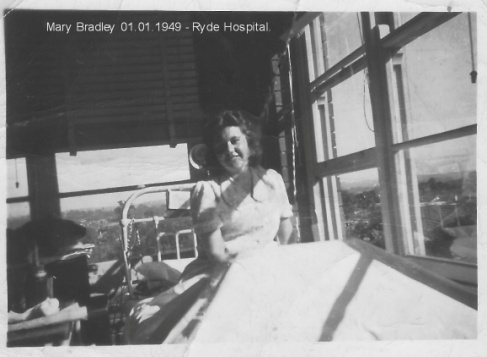
It is far too easy to dismiss all those months in between my fifteenth and nearly seventeenth birthdays as being easy, they were not, there were countless challenges. One persists because there are no alternatives we do what we can, in the best manner and grace that we are able, not to grieve for what might have been. As individuals with GBS or CIDP residual effects may often be our constant companion throughout our lives, challenges become commonplace, often our independence may need help, stairs without railings, tight lids on jars, tripping over almost nothing, fatigue, yes many of us find these are day to day challenges. Nevertheless we manage; after all we are GBS-CIDP survivors!!!!
Often in my role as “Call a friend” for GBS-CIDP telephone calls, I listen to how quite ordinary people unexpectedly thrown into quite extraordinary situations deal with confronting issues. How strongly and determinedly they face uncertain futures and yet keep a positive focus to do the best they can each day.
There are many aspects to one’s inspiration. It comes in many guises from many people we meet. It is a many faceted emotion. We absorb and learn and hope to emulate these positive aspects into our own lives.